
Political Crisis Clouds 2026 World Cup as Canada Prepares to Co-Host Historic Tournament
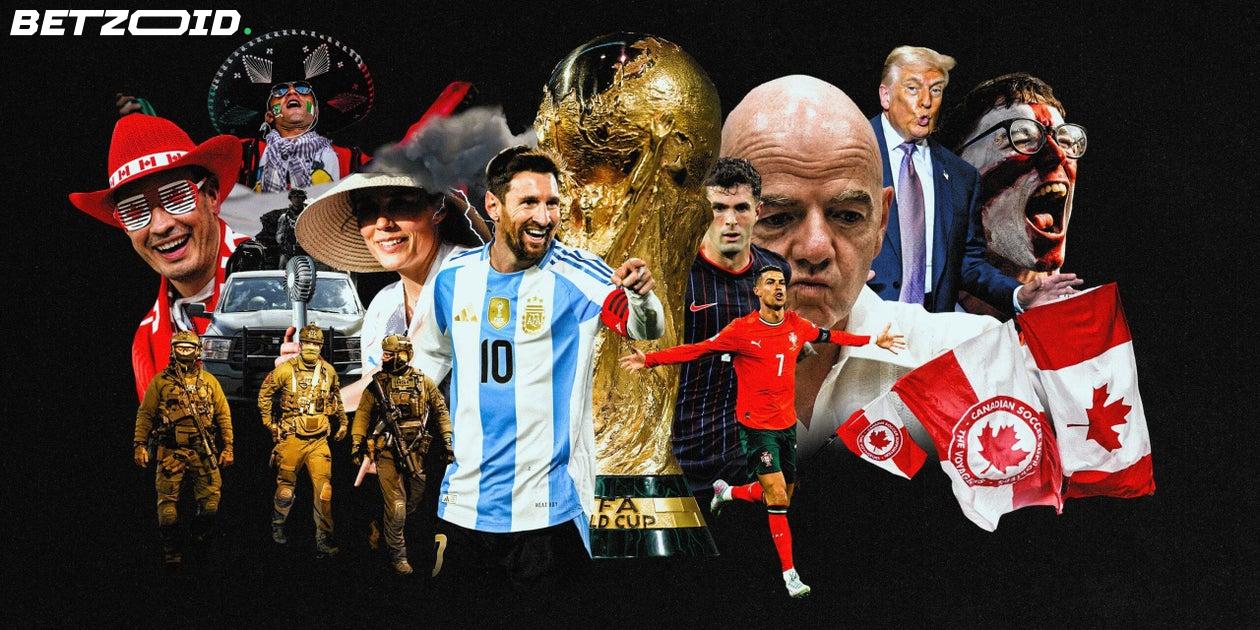
The countdown is on – just 100 days remain until the most expansive World Cup in history. With 48 nations competing across 104 matches and three host countries including Canada, FIFA president Gianni Infantino has proclaimed it "the greatest event that humanity, mankind, has ever seen."
However, the lead-up to this historic tournament has been anything but smooth, with mounting concerns overshadowing what should be pure excitement for football fans across North America.
The statistics are mind-boggling. An estimated six billion viewers – representing nearly three-quarters of the global population – are expected to tune in. Ticket demand shattered expectations with 50 million requests in the opening month alone. The on-field talent promises to be extraordinary, featuring superstars like Messi, Ronaldo, Haaland, Mbappé, and emerging sensations including Lamine Yamal.
The tournament will also mark a historic milestone as four nations make their World Cup debut: Cape Verde, Curaçao, Jordan, and Uzbekistan. These underdog narratives should have the entire football world buzzing with anticipation.
Growing Political Storm Threatens Tournament Stability
Unfortunately, escalating political tensions are casting a shadow over the celebration. The situation began with friction among the three co-hosting nations – Canada, the United States, and Mexico. Subsequently, immigration enforcement measures threatened to block visa approvals for supporters from Senegal, Ivory Coast, Haiti, and Iran.
Diplomatic relations became further strained when American statements regarding Greenland upset Denmark and triggered concerns throughout the European Union. Civil unrest erupted in Minneapolis following incidents involving immigration enforcement officials. Meanwhile, drug cartel violence intensified in Guadalajara, one of the designated host cities.
The situation reached a critical point following military confrontations between the United States, Israel, and Iran. Reports emerged of Iran's Supreme Leader being targeted in these strikes, with Iran responding through attacks on American military installations throughout the Middle East.
Serious questions now surround Iran's participation in Group G, where they're scheduled to face Belgium, Egypt, and New Zealand. Such a withdrawal would be unprecedented in modern football history – no nation has pulled out of a World Cup since 1950.
Implications for Fans and Bettors
For Canadian football enthusiasts planning to attend matches and those interested in tournament wagering, this climate creates significant uncertainty. Ticket prices have already reached stratospheric levels, accommodation costs have skyrocketed, and security experts are warning about potential "catastrophic" issues if government funding disputes continue.
Should Iran withdraw from competition, the entire dynamic of Group G would transform dramatically. Belgium would emerge as overwhelming favourites, while the prospects for Egypt and New Zealand would shift considerably. Anyone who has already placed futures wagers on group outcomes needs to monitor these developments carefully.
Despite the surrounding turmoil, the tournament is scheduled to commence on June 11 when Mexico takes on South Africa at the iconic Azteca Stadium. Canada will launch their campaign on June 12 in Toronto, followed by the United States opening against Paraguay at SoFi Stadium that same evening.
Past World Cups have certainly faced controversy. Russia 2018 became mired in political tensions before FIFA ultimately suspended the nation following its invasion of Ukraine. Qatar 2022 sparked intense scrutiny regarding migrant labour conditions and LGBTQ+ rights. South Africa 2010 and Brazil 2014 both encountered safety and security concerns.
However, the current situation feels fundamentally different. The magnitude of political instability is alarming even for veteran football journalists. The "United" bid that secured hosting rights promised cohesion, stability, and minimal risk. At this juncture, those assurances seem distant.
The optimistic perspective holds that once competition begins, football will provide a welcome respite from global tensions. World Cups have historically brought diverse populations together in remarkable ways. Anyone who has experienced a World Cup firsthand can share stories of rival supporters sharing moments of camaraderie – exchanging jerseys, celebrating together, and forging unexpected friendships. The special bond between Mexico and South Africa fans in 2010 remains legendary, as do the unforgettable scenes of Brazil and Scotland supporters celebrating side by side in previous tournaments.
This World Cup is guaranteed to shatter all attendance and revenue benchmarks. Canadian football fans will witness Messi and Ronaldo gracing the world's biggest stage potentially for the final time. The championship match at MetLife Stadium on July 19 will capture the attention of billions globally.
Yet beneath the spectacle and excitement lies genuine uncertainty. A tournament designed to unite the world is unfolding against a backdrop of dangerous international tensions. The fundamental question remains: Can football bridge divides when geopolitical forces seem determined to create them? The answer will reveal itself over the coming months.