
1994 World Cup USA: How America Silenced the Doubters and Changed Football Forever
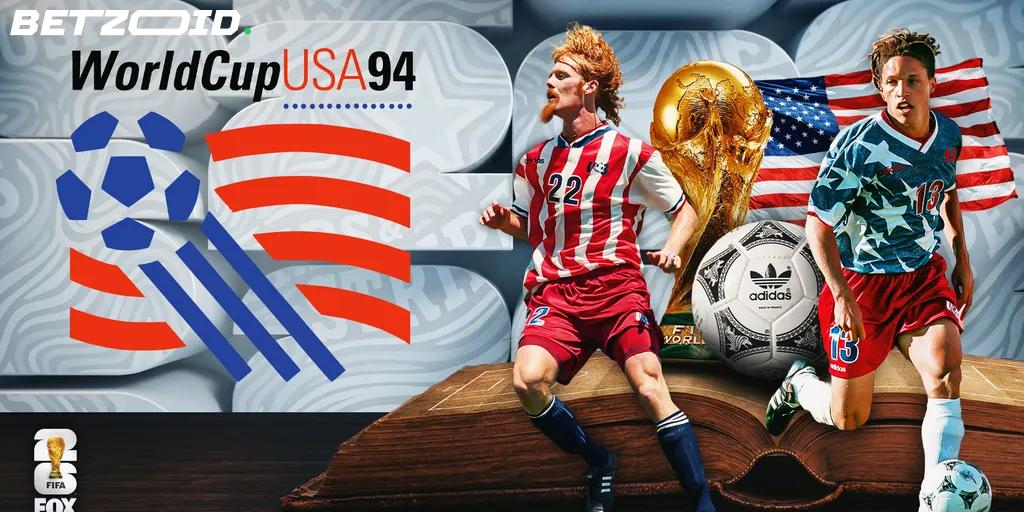
When FIFA awarded the 1994 World Cup to the United States, football purists across Europe and South America were apoplectic. America hosting the world's most prestigious football tournament? A nation without a professional league structure, where the sport ranked somewhere below college basketball in the public consciousness? The critics were certain it would be a disaster.
They couldn't have been more mistaken.
An astounding 3.6 million fans packed stadiums from coast to coast, establishing an all-time World Cup attendance record that remains unbroken more than 30 years later. Far from being a failure, the tournament became a resounding triumph that forever altered the trajectory of the sport in North America.
Memorable matches that captivated a nation
The host Americans entered the competition as heavy underdogs, carrying the weight of a winless campaign at Italia '90. But playing on home turf provided unexpected inspiration.
Their tournament opener against Switzerland took place at the Pontiac Silverdome outside Detroit — marking the first-ever indoor World Cup match. Played on temporary grass inside the NFL stadium without proper climate control, the conditions were brutal. Midfielder Thomas Dooley later described it as "the worst place I have ever played at." Yet Eric Wynalda's spectacular curling strike gave the Americans something to celebrate in a 1-1 draw.
What followed was even more remarkable: a shocking 2-1 upset of heavily-favoured Colombia, followed by a 1-0 defeat to Romania that set up a Round of 16 clash with Brazil. Playing on Independence Day at Stanford Stadium, the Americans fell 1-0 to Bebeto's decisive strike, exiting with their heads held high despite facing a Brazilian side that proved superior even when reduced to 10 men.
Brazil marched all the way to their fourth World Cup crown and first since 1970, defeating Italy in a goalless final decided by penalties. The enduring image from that match remains Roberto Baggio skying his penalty over the crossbar — Italian heartbreak meeting Brazilian glory.
The dynamic duo of Romario and Bebeto netted eight goals between them throughout the competition. Romario captured the Golden Ball after scoring five times, including strikes in every group match, establishing himself as the tournament's dominant individual performer.
Unprecedented records and a Golden Boot controversy
The 1994 edition produced several of the most peculiar individual achievements in World Cup lore.
Russian striker Oleg Salenko accomplished something never seen before or since: five goals in a single match against Cameroon during group play. His tournament ended after the group stage with six total goals, yet that tally was sufficient to claim a share of the Golden Boot alongside Bulgaria's Hristo Stoichkov, who reached the same number over four additional matches. This remains the only shared Golden Boot in tournament history.
While Salenko set an individual record, Stoichkov's impact proved far more consequential. His brilliance propelled Bulgaria to an improbable semifinal appearance, headlined by a stunning free-kick that eliminated defending champions Germany. Two players, six goals each, but vastly different legacies.
Then came the Diego Maradona tragedy. The Argentine legend's 1994 campaign lasted precisely two matches. After scoring a memorable goal against Greece and celebrating with an infamous, wild-eyed camera charge, he was expelled from the tournament following a positive drug test. The hero of Mexico '86 departed in disgrace. It was his final World Cup appearance.
- Golden Ball: Romario (Brazil) — 5 goals and commanding performances throughout the knockout rounds
- Golden Boot: Oleg Salenko (Russia) and Hristo Stoichkov (Bulgaria) — 6 goals apiece, the competition's only shared Golden Boot
- Golden Glove (Lev Yashin Award): Michel Preud'homme (Belgium) — clean sheets versus Morocco and the Netherlands before Round of 16 elimination
- All-time attendance record: 3.6 million spectators, a mark that still stands unchallenged
The tournament's influence extended far beyond that memorable summer. Major League Soccer emerged directly from the momentum generated in 1994, now operating 30 franchises spanning 25 American cities and three Canadian markets. Today's American player pool bears zero resemblance to the era when Alexi Lalas, Cobi Jones, and Marcelo Balboa — with their iconic hairstyles — represented the nation on home soil.
The 2026 World Cup returns to North American shores as a tri-nation event featuring the United States, Canada, and Mexico, with the championship match scheduled for July 19th at MetLife Stadium in East Rutherford, New Jersey. The country preparing to host looks nothing like the one that raised eyebrows three decades ago. That transformation began in the summer of 1994.