
Tottenham's Decade of Decline: From Premier League Favourites to Relegation Battle
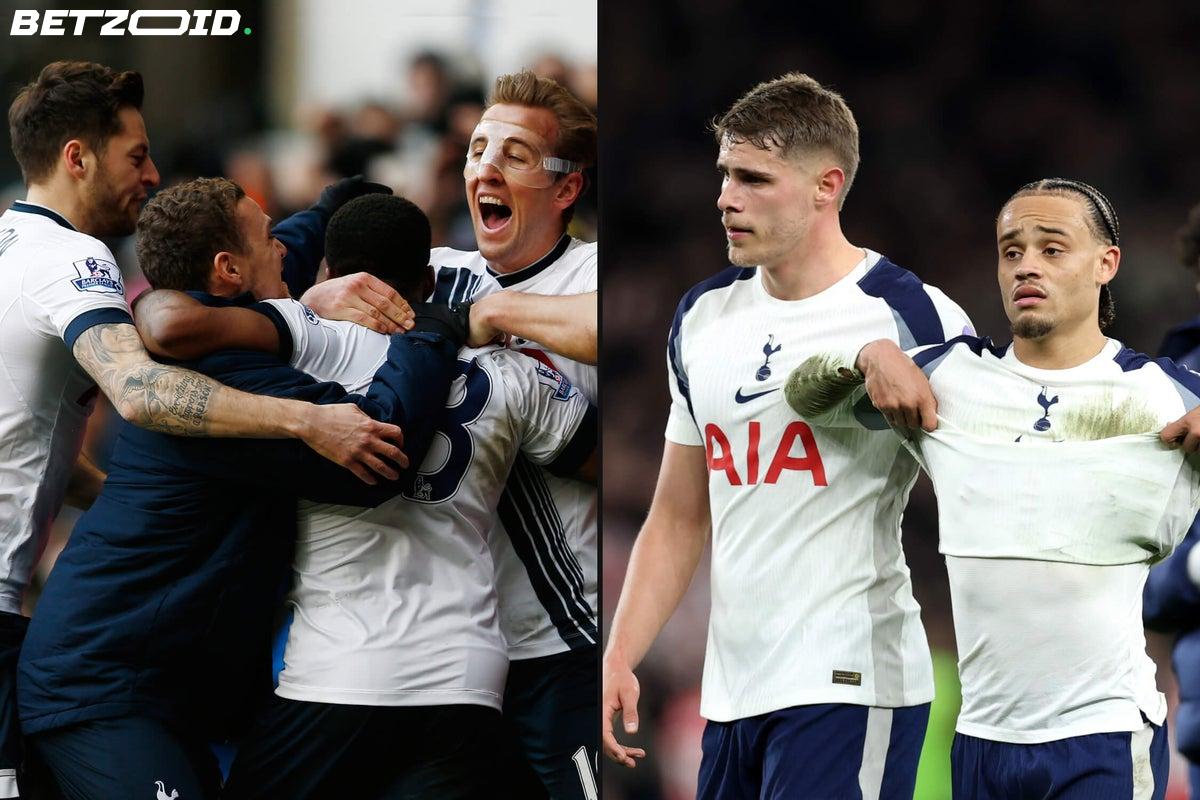
Cast your mind back a decade. Tottenham Hotspur were flying high and dreaming big.
On February 28, 2016, Mauricio Pochettino's Spurs rallied from behind to defeat Swansea City 2-1 at White Hart Lane. The atmosphere was electric. Then came the news that sent supporters into delirium - Arsenal had fallen 3-2 at Manchester United.
Suddenly, Tottenham sat three points clear of their North London rivals and just two points behind surprise leaders Leicester City. For the first time in history, bookmakers installed Spurs as Premier League title favourites at 7-2 odds.
Today, those same oddsmakers have Tottenham at 9-2 to be relegated. What went so catastrophically wrong?
The Fatal Flaw: Refusing to Cash In
Tottenham's cardinal sin was simple: they kept players past their expiration date. Pochettino assembled an exceptional squad on limited resources, but every successful team eventually runs its course. Players grow restless. The spark dims.
Kyle Walker's 2017 transfer to Manchester City proved the lone exception. Danny Rose came close to joining Chelsea but ultimately remained. Dele Alli never secured his anticipated big-money move, even as club insiders worried about his declining form. Christian Eriksen departed on the cheap with only six months remaining on his deal.
Chairman Daniel Levy feared the optics of becoming a feeder club. However, clinging to these stars caused the entire project to stagnate. Club officials privately likened it to failing to refresh a swimming pool - the water inevitably turns stale.
This strategy had another devastating consequence: no funds for reinforcements. With massive stadium debt looming, finances were stretched thin. Following Lucas Moura's arrival in January 2018, Tottenham went an astonishing 18 months without a single signing. That drought would haunt them for years.
The summer 2018 pursuit of Jack Grealish from Aston Villa exemplified their struggles. Levy's opening offer - a paltry £3 million plus Josh Onomah - was laughable. By the time Spurs made a serious bid, Villa had changed ownership and slammed the door shut. Another chance squandered.
Managerial Chaos and Strategic Confusion
By November 2019, Pochettino's tenure ended. The heartbreaking Champions League final defeat to Liverpool had crushed morale. When results deteriorated early the following campaign, Levy made a stunning move: hiring Jose Mourinho.
The decision defied logic. Mourinho's defensive philosophy contradicted everything Pochettino had established. The appointment revealed Levy prioritized prestige over coherent planning.
In 2021, Levy handed extensive authority to Fabio Paratici from Juventus. While some acquisitions succeeded - Cristian Romero and Dejan Kulusevski among them - many failed, and Tottenham fell further behind shrewder competitors.
The big-ticket Premier League signings proved particularly disappointing. Richarlison commanded £50 million but managed just 23 league goals across four seasons. Brennan Johnson cost £47.5 million, scored 18 times, then was sold at a loss. Dominic Solanke's £55 million price tag yielded 11 goals in two years. Mohammed Kudus arrived for £55 million but has registered only two league goals in 19 appearances.
None were complete disasters, but none justified their fees either. Meanwhile, rivals mining European markets for emerging talent secured superior value.
For years, Harry Kane and Son Heung-min masked these deficiencies. Both were genuinely world-class. But Kane departed for Bayern Munich in 2023, and Son joined LAFC in 2025. No succession plan existed to identify their replacements or nurture future stars.
The wage figures are revealing. Arsenal now spend €95 million more annually on salaries than Spurs. Chelsea's wage bill exceeds Tottenham's by €121 million. Liverpool pays €191 million more. Spurs' wages-to-revenue ratio sits at just 42 percent - supporters view this as evidence of inadequate investment.
When Tottenham captured the Europa League last season under Postecoglou, they possessed a golden opportunity. Hundreds of thousands celebrated in the streets. Yet rather than capitalizing on that momentum, the club dismissed Postecoglou and appointed Thomas Frank. Then Levy himself was ousted mid-campaign.
A decade ago, Tottenham stood two points off the summit with 11 matches remaining. Today, they're battling the drop. It's a sobering reminder of squandered chances, inadequate planning, and identity crisis. For those wagering on Spurs' prospects, the outlook has never been bleaker.