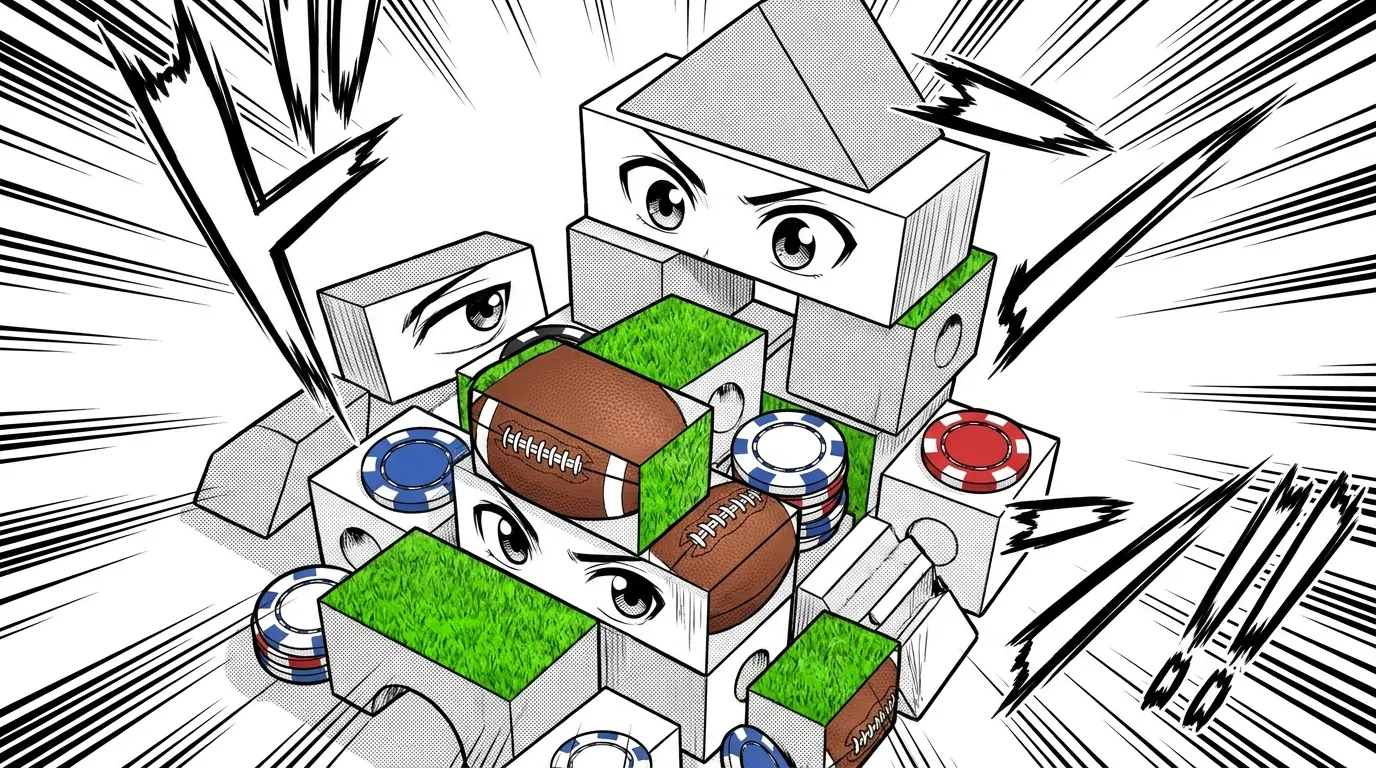
You watch a soccer match where one striker is having the game of his life—two goals already, shots raining in, corners piling up. A few years ago, you'd have to pick a single market and hope. Now you can stitch together "that striker scores again," "over 9.5 corners," and "both teams to score" into one combined wager on the same fixture. That's a bet builder, and it's reshaped how Canadians approach single-match betting.
Here's what most quick explanations miss: a bet builder isn't just a fun toy for stacking longshots. It's a flexible tool with real mechanics behind the odds—and real reasons certain combinations get blocked. This guide breaks down what a bet builder means in betting, how the odds get calculated, which markets you can combine, and whether these bets are actually worth your stake. No fluff, just how it really works.
A bet builder lets you combine multiple bet types from a single sporting event into one wager, with the odds multiplied together into a single price. Instead of betting on the match result alone, you might add total goals, a specific player to score, and the number of cards—all on the same game, all on one slip.
The bet builder meaning comes down to this: you're creating a custom multi-leg bet where every leg lives inside one fixture. Every selection must win for the bet to pay out. Miss one leg, and the whole thing collapses.
What makes this different from older betting? Sportsbooks used to treat each market on a game as separate and incompatible. You couldn't easily link them. Bet builders broke that wall down, letting bettors express a detailed prediction—not just "Team A wins" but "Team A wins 2-0 with their captain scoring first." The more specific your story about the match, the longer the odds, and the bigger the potential return. If you bet from your phone, most of the latest betting apps in Canada now build this feature right into single-game screens.
Is a Bet Builder the Same as a Same Game Multi?
Basically, yes. "Same game multi" (SGM) is the term most Australian and some Canadian books use, while "bet builder" is the European-rooted name—they describe the identical product. So what is a same game multi? It's combining several outcomes from one fixture into a single priced bet. The branding shifts by operator, but the mechanics don't. If you understand one, you understand both. Some books even run both labels depending on the sport.
Why Bettors in Canada Are Drawn to Bet Builders
The appeal isn't complicated, but it runs deeper than "big payouts." Bet builders give you control. You're not picking from a fixed menu—you're authoring your own bet based on what you actually expect to happen in a game you're watching.
Canadian bettors have leaned into these for a few concrete reasons:
One match, full engagement — You can watch a single game and have multiple things to root for, instead of needing five different fixtures across a slate.
Bigger odds from smaller stakes — Combining three or four selections turns a $5 stake into a triple-digit potential return, which is why they're popular for low-risk entertainment betting.
Express a specific read — If you genuinely think a defense is leaking goals and a winger is in form, you can bet that exact scenario rather than a generic outcome.
Perfect for marquee events — Stanley Cup playoff games, big NFL Sundays, Champions League nights—bet builders shine when you're locked into one fixture anyway.
No need to find value across many games — You concentrate your research on a single matchup you know well.
That said, the same thing that makes them attractive makes them dangerous. The dopamine of building a five-leg slip with juicy odds can pull you toward bets you'd never make individually. In our experience watching how players use these, the bettors who stay disciplined treat bet builders as occasional entertainment—not a core strategy. The ones who chase the long odds every weekend tend to burn through bankroll fast.
Are Bet Builder Bets Actually Worth It?
Honest answer? It depends on how you use them. Are bet builder bets worth it as a profit engine? Rarely. Every leg you add increases the bookmaker's built-in margin, because the margin compounds across selections. A four-leg builder can carry a far higher effective house edge than a single bet.
But worth it for entertainment and engagement? Absolutely—if you stake small and accept you'll lose most of them. The smart approach is treating a bet builder like a lottery-style flutter: low stake, high ceiling, no expectation of consistent returns. Where bettors go wrong is treating them as value plays. The math doesn't support that. Keep stakes modest and the entertainment value stays intact.
How Does a Bet Builder Work Step by Step?
Walking through the actual process clears up most confusion. Here's how a bet builder works from open slip to settled bet, using a soccer match as the example—though the same flow applies to hockey, basketball, or football.
Pick your fixture — Open a single game and look for the "Bet Builder" or "Same Game Multi" tab. This is where eligible markets get grouped together.
Choose your first selection — Maybe "Home team to win." The slip starts building, but no price shows yet because you've only got one leg.
Add more legs — Tap "over 2.5 goals," then "a named player to score anytime." Each addition feeds into the combined odds calculation.
Watch the odds update — As you stack selections, the price climbs. Three legs might take you from 1.80 to 6.50, depending on how likely the book thinks each outcome is.
Check for conflicts — If two selections can't logically coexist, the system flags it and won't let you add the second. More on why below.
Confirm your stake — Enter the amount. The slip shows your potential return based on the combined odds.
Place the bet — Once locked in, all legs must win. The bet settles only after the match finishes and every market resolves.
The key thing to remember: this is an all-or-nothing wager. If your striker scores, the match ends with three goals, but the home team draws instead of winning—your whole bet loses. There's no partial payout for getting two of three right. That's the trade-off for the inflated odds. The more legs, the lower your real chance of every single one landing, even when each leg feels likely on its own.
How Are Bet Builder Odds Calculated?
So how are bet builder odds calculated? At the simplest level, the book multiplies the decimal odds of each selection together. Three legs at 1.50, 1.80, and 2.00 give you 1.50 × 1.80 × 2.00 = 5.40. That's the base.
But here's where it gets nuanced. Modern bet builders adjust for correlation—when one outcome makes another more likely. If a team winning 3-0 makes "over 2.5 goals" almost certain, the book won't give you the full multiplied price, because those events are linked. Pricing engines recalculate based on how the selections interact, often using sophisticated models. This is also where the margin compounds, quietly raising the house edge with each added leg. Betlama's educational breakdowns highlight this exact point: stacked margins are why builders rarely offer long-term value.
Why Are Some Selections Not Allowed Together?
Ever tried adding two legs and gotten a greyed-out error? That's correlation control. Why are some bet builder selections not allowed? Because combining them would create a guaranteed or near-guaranteed outcome that breaks the book's pricing.
Example: you can't usually pair "Team A to win 2-0" with "Team A to keep a clean sheet"—the first already guarantees the second. Letting both in would mean stacking odds on what's effectively one event, gifting bettors free value. Books block these dependent combinations to protect their margins. Some operators allow correlated picks but re-price them sharply lower. Either way, the system is preventing you from exploiting outcomes that aren't truly independent.
Building Smarter Bets Without Chasing Long Shots
The biggest mistake I see? Bettors treating a bet builder like a scratch ticket—piling on six legs at 50.00 odds and praying. That's not strategy, that's hope. Building smarter means resisting the urge to chase the longest possible price.
Here's how disciplined bettors actually approach it:
Cap your legs — Two or three selections keep your real win probability reasonable. Every leg beyond that drops your odds of cashing dramatically while feeding the book's margin.
Favor correlated logic you understand — If you genuinely expect a high-scoring game, "over 2.5 goals" plus "both teams to score" tells a consistent story rather than random stacking.
Stake what you'd lose on a coffee run — These are entertainment bets. Treat the stake as the cost of engagement, not an investment.
Skip player props you can't read — Adding "random midfielder to score" just because the odds jump is how slips die.
Track your results honestly — Over a season, log how your builders perform. Most bettors are shocked how rarely four-leg slips land.
The truth nobody markets to you: a tight two-leg builder you actually believe in beats a flashy six-leg moonshot every time, both for enjoyment and for not draining your funds. Long shots feel exciting because they pay big—but the reason they pay big is they almost never hit. Keep expectations grounded. The math always favors the book over time, and bet builders amplify that edge with every leg. Bet small, bet specific, and walk away when it's not your night. The same discipline applies whether you're building around a Ballon d'Or contender on one of these football betting sites or stacking player points in a hockey game.
Which Markets Can You Add to a Bet Builder?
What markets can you add to a bet builder? It varies by sport and operator, but the common ones cover match result, total goals or points, both teams to score, handicaps, player to score or assist, cards and corners in soccer, and shots on target. Hockey builders often include total goals, period results, and player points. Basketball offers spreads, totals, and player scoring lines. Even esports markets are catching up—you'll see map and round props surface on the better Valorant betting sites. The deeper the sport's data, the richer the menu. Major fixtures get the widest range—a marquee soccer match might offer dozens of eligible markets, while a lower-tier game keeps options thin.
Bet Builders vs Accumulators and Related Bets
People constantly mix these up. The core difference between a bet builder and an accumulator comes down to one word: fixtures. A bet builder combines markets within a single game. An accumulator combines selections across multiple separate games. Both need every leg to win, but the structure—and the correlation rules—differ completely.
This matters because correlation only exists within one match. In an accumulator, your legs are independent events across different games, so the odds are simply multiplied with no correlation adjustment. Can you combine bets on one game across different fixtures? No—that's where the line is drawn. Here's a clear comparison:
Feature
Bet Builder / Same Game Multi
Accumulator
Number of fixtures
One single game
Multiple separate games
Legs must all win
Yes
Yes
Correlation pricing
Yes, selections are linked
No, events are independent
Blocked combinations
Common, due to dependency
Rare
Typical use case
One match you're watching closely
A slate of games across a weekend
Margin stacking
High per leg
High per leg
Both formats carry compounding margins, so neither is a reliable profit route. The choice is about how you want to bet: deep on one game, or spread across several. Betlama covers accumulators in a dedicated breakdown if you want to compare the maths side by side. Baseball fans, for what it's worth, get plenty of player-prop depth to build around on the leading MLB betting sites.
Here's the one thing to carry away: a bet builder is a precision tool, not a jackpot machine. It rewards you for understanding a single match deeply—but it punishes greed harder than almost any other bet type, because every added leg quietly stacks the house edge against you. Use it when you've got a genuine read on a game, keep your legs tight, and stake only what you're happy to lose for the entertainment. If you mainly bet on an iPhone, we round up the smoothest builder interfaces in our guide to the best iOS betting apps in Canada. Treat your builder slip like a focused prediction, not a lottery ticket, and you'll enjoy the format without it draining your bankroll. If correlation and margin maths interest you, that's the rabbit hole worth exploring next.
FAQ
A bet builder lets you combine multiple bet types from a single sporting event into one wager, with the odds multiplied together into a single price. Every selection must win for the bet to pay out, so missing even one leg means the entire bet loses.
Yes, they are essentially identical products. 'Same game multi' (SGM) is the term used by Australian and some Canadian books, while 'bet builder' is the European-rooted name, but both describe combining several outcomes from one fixture into a single priced bet.
As a profit engine, rarely, because every added leg increases the bookmaker's built-in margin, stacking the house edge against you. They are best treated as low-stake entertainment bets with a high ceiling, not as consistent value plays.
At the simplest level, the book multiplies the decimal odds of each selection together. Modern bet builders also adjust for correlation, so if one outcome makes another more likely, the price is reduced rather than fully multiplied.
This is called correlation control, where the system blocks combinations that would create a guaranteed or near-guaranteed outcome. For example, you usually can't pair 'Team A to win 2-0' with 'Team A to keep a clean sheet' because the first already guarantees the second.
A bet builder combines markets within a single game, while an accumulator combines selections across multiple separate games. Because correlation only exists within one match, accumulator legs are treated as independent events with no correlation pricing adjustment.
Common markets include match result, total goals or points, both teams to score, handicaps, player to score or assist, cards, corners, and shots on target. The range varies by sport and operator, with major fixtures offering the widest selection of eligible markets.