
VAR Drama Exposes Premier League's Growing Set-Piece Enforcement Problem
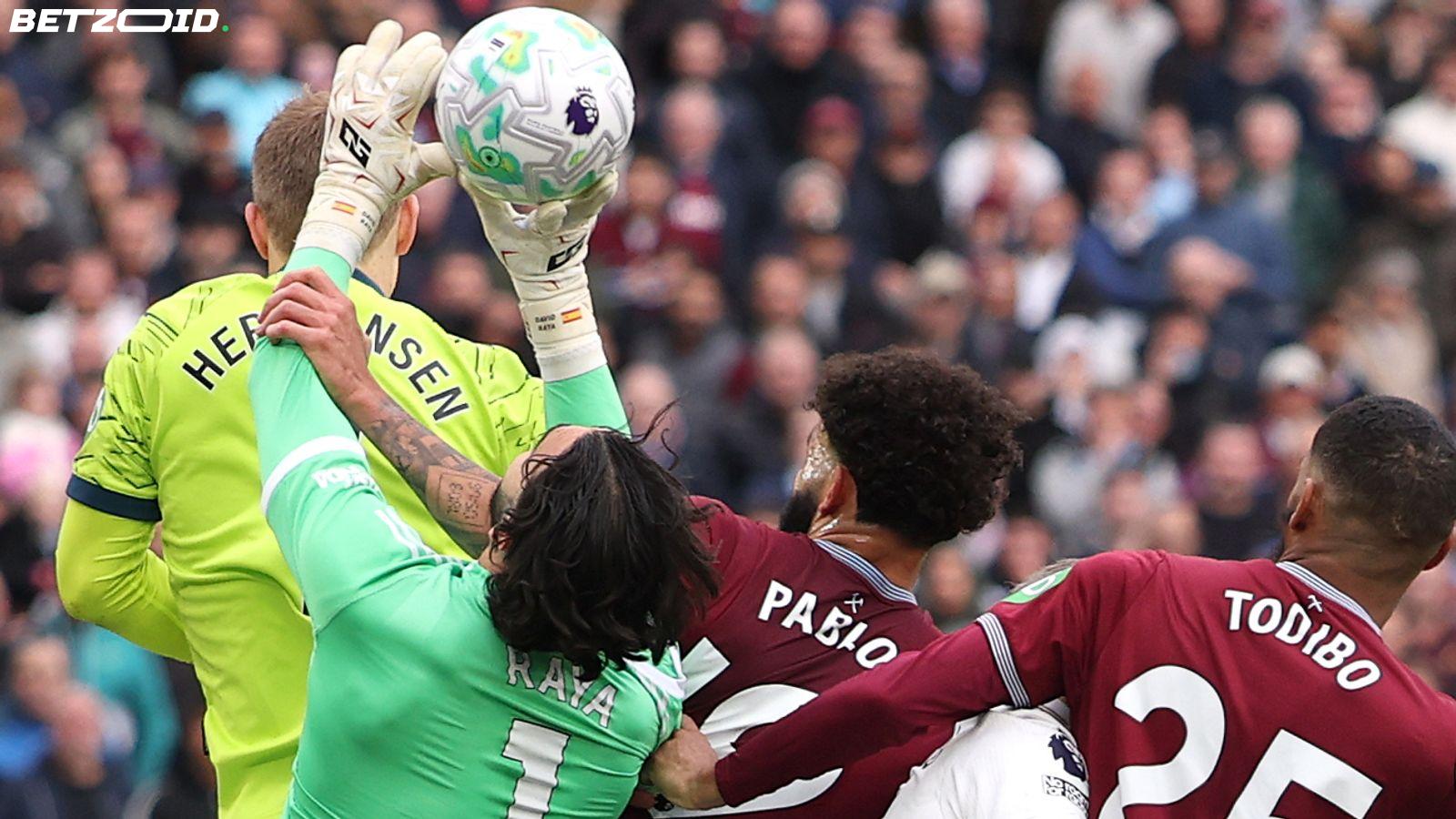
Roy Keane put it bluntly: "Don't make it such an obvious foul." The irony? It apparently wasn't clear enough for match officials to spot it live — and that sums up the Premier League's current dilemma perfectly.
West Ham saw a dramatic 95th-minute equalizer against Arsenal wiped out this past Sunday after VAR official Darren England directed referee Chris Kavanagh to review a foul by Pablo on goalkeeper Raya. The entire review process consumed four minutes and 17 seconds, with Kavanagh examining 17 different replay angles. Meanwhile, pundit Gary Neville reached the identical conclusion from the broadcast booth after just two replays in under 60 seconds.
Correct call, questionable process
Make no mistake: the decision was accurate. Pablo had fully extended his arm across Raya's body, preventing the goalkeeper from challenging for the ball. Jean-Clair Todibo was simultaneously tugging at the keeper's jersey. Dermot Gallagher broke down the sequence properly on Ref Watch — Raya was fouled first, Declan Rice's challenge on Mavropanos happened afterward, and officials must rule based on the chronological sequence. West Ham's formal request to PGMO for additional clarification likely won't produce much.
However, West Ham do have valid concerns about a different aspect of the incident. Their contention — that this hardly qualified as "clear and obvious" given the extended deliberation time — highlights a genuine inconsistency in how the standard gets enforced. When a decision demands 17 replay angles and over four minutes of analysis, the definition of "clear and obvious" begins to feel quite flexible.
Former top-flight referee Mike Dean was direct in his assessment: "I'm frustrated that officials aren't making decisions. They're simply not calling things on the field." His point stands. The on-field crew should have whistled for this infringement in real time. The fact they missed it — requiring VAR intervention to correct the error — represents the more fundamental problem.
Physical obstruction has become a coaching tactic
What Sunday's match truly revealed is that penalty-box wrestling has evolved into a deliberate strategy across the Premier League. This isn't accidental contact — players receive specific instructions to obstruct and hold during set pieces because the likelihood of getting penalized remains minimal.
PGMO head Howard Webb announced a "measured crackdown" on holding infractions back in August. The threshold guidance specifies that a penalty should only be awarded if the foul meets three criteria: "clear, impactful and sustained" — and if even one element is absent, no penalty is given. Through last month, officials had awarded just seven penalties all campaign for holding or grappling violations. Seven total.
The Premier League's internal survey data explains Webb's cautious approach. Clubs and stakeholders have consistently emphasized:
- A high bar for handball infractions
- Limited VAR involvement
- Acceptance of physical play
The physical nature of English football represents a legitimate marketing advantage. But there's a meaningful distinction between a physical competition and one where jersey-tugging at corner kicks goes unpunished as policy. The present guidelines essentially encourage the behaviour.
For betting markets, these inconsistencies carry real significance. Corners and set-piece scenarios are crucial factors in odds-setting — when foul enforcement in these situations is this unpredictable, outcomes become increasingly difficult to forecast. West Ham are fighting relegation where this dropped point could prove decisive. Arsenal might find themselves in a title race where a late equalizer would have dramatically altered the narrative. Sunday's stakes couldn't have been higher.
Gallagher described it as "probably the most impactful decision VAR has rendered in the seven years since its introduction." He may well be correct. And the league still lacks a coherent solution to prevent similar controversy from recurring.