
Raheem Sterling's Difficult Chapter in Rotterdam: A Career at the Crossroads
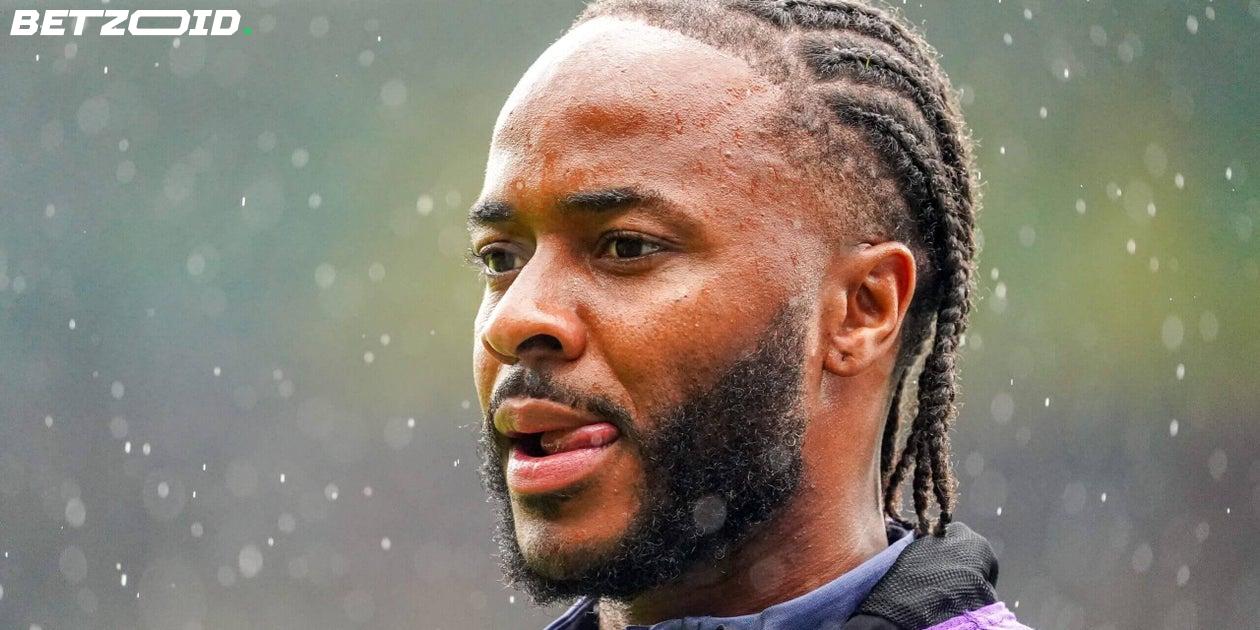
"If I were in charge, I'd ask for a refund and tell him, 'Just head home.'" Those are the cutting words from Willem van Hanegem — a Feyenoord icon with a stand bearing his name — regarding Raheem Sterling. You won't find a more brutal assessment than that.
When Sterling touched down in Rotterdam this past January, he was marketed as 'Raheem the Dream,' representing one of the most significant signings in Feyenoord's storied history. The Dutch club even relocated their training sessions 85 miles across the Belgian border to Tubize, allowing him to participate while his work permit was being finalized. It was VIP treatment from the very beginning.
The harsh reality tells a different story: seven matches played, four of those as a starter, zero goals scored, and just one assist. His spot in the starting eleven has been handed to 19-year-old Tobias van den Elshout — a central midfielder deployed out of position on the left flank — while Sterling watches from the bench with vacant seats surrounding him.
Where It All Went Wrong
Understanding the background is crucial. Prior to joining Feyenoord, Sterling had endured seven months without competitive action after Chelsea essentially sidelined him — continuing to pay his £325,000 weekly wages while he sat idle. His loan spell at Arsenal yielded 17 league outings, with only seven coming as starts. By the time he arrived in Rotterdam, he was desperately trying to regain match sharpness while the squad was battling for Champions League qualification. It was a recipe for failure.
Robin van Persie admitted it straightforwardly: "We were aware his match fitness wasn't up to our standard." What the Dutch coach couldn't fully explain is why, three months into his tenure, Sterling has actually regressed instead of improving. The performance gap between him and the team's requirements hasn't narrowed. It's expanded.
Jan Everse, a former Dutch international who played alongside Johan Cruyff at Ajax and later coached a young Arne Slot at PEC Zwolle, observed the situation unfold from Rotterdam. His assessment pulls no punches: "He's lost that explosiveness. He stumbles over his own feet. In one-on-one situations, he can't get past defenders anymore. His confidence is shot — and that's because he realizes he can't execute what he's trying to do."
During a March fixture at NAC Breda, Sterling was mocked by the home supporters before being substituted just past the hour mark. Against Groningen last month, he entered as a 74th-minute replacement, received possession, attempted to dribble past a defender, and tumbled to the ground. The stadium erupted in laughter once again. This transcends a temporary slump. This signals something far more troubling.
What Lies Ahead
Feyenoord secured a 1-1 draw against AZ this past Sunday, clinching second place and Champions League qualification — the primary objective of the entire campaign. Sterling remained on the bench, an unused substitute for the third occasion in four matches. Jordan Bos, naturally a left-back, occupied the attacking wide position Sterling was brought in to fill.
Van Persie has one remaining match — away at Zwolle this coming weekend — and has indicated the club will subsequently "meet together" with Sterling to evaluate his future. Everyone at Feyenoord acknowledges his attitude has remained professional, that he's been a constructive presence in the locker room. However, attitude alone doesn't earn you Champions League minutes. And a player who can't secure playing time in the Eredivisie isn't going to feature in Europe's elite competition next season.
At 31 years old, Sterling confronts a summer of reinvention. Major League Soccer appears to be the most logical destination. The Middle East presents another possibility. A Premier League club taking a calculated risk on him at a reduced price is conceivable but improbable given what the past 18 months have revealed. His personal trainer, Ben Rosenblatt, maintains one defining moment can alter everything — "it only takes one moment to transform everyone's perception" — and he's theoretically correct. But that moment never materialized in Rotterdam. And Father Time isn't waiting for Sterling.
What he does leave behind is a career worthy of celebration: four Premier League championships with Manchester City, the Golden Boy honour at Liverpool, 82 England caps spanning three World Cups, an MBE, and inclusion in UEFA's Euro 2020 team of the tournament. Over 600 appearances at the elite level before turning 30. That's his legacy.
On Sunday, when the final whistle sounded, he handed his jersey to a young fan in the stands, exchanged handshakes and embraces with the squad, and positioned himself at the edge of the penalty area alongside his teammates to acknowledge the supporters. Then the crowd began chanting his name. For a brief moment, it felt like 2019 all over again.
But it wasn't. And everyone inside De Kuip understood that.