
Hearts vs Celtic: Scotland's Most Thrilling Title Race in Decades
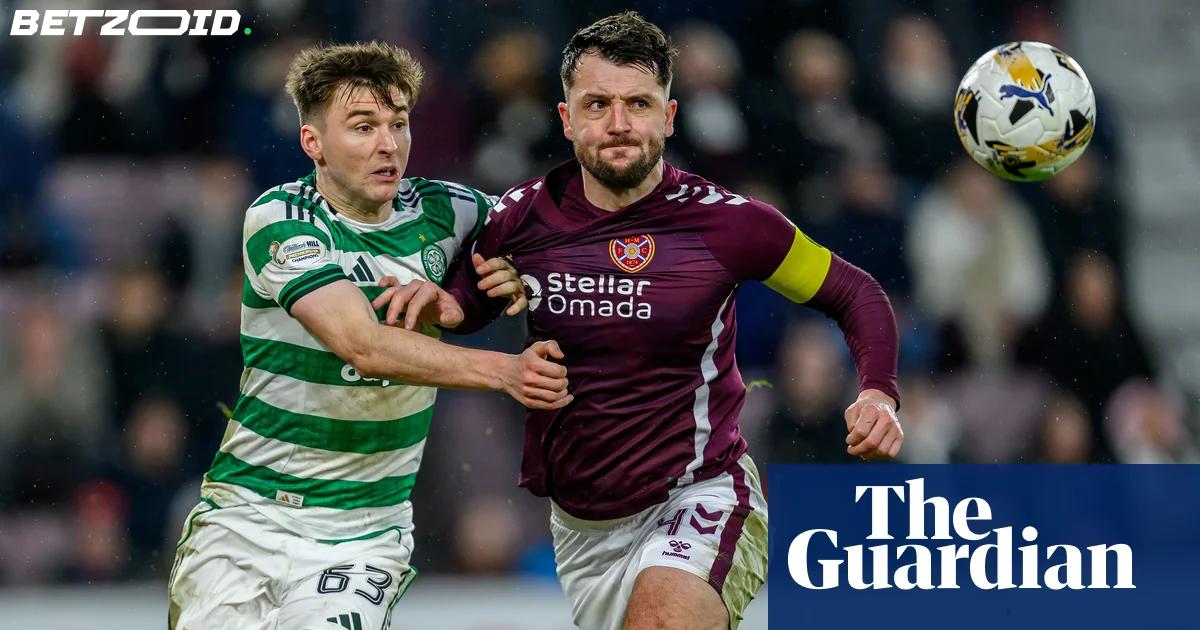
When Tony Bloom predicted Hearts could contend for the Scottish title this season, skeptics were everywhere. The Edinburgh club hadn't even cracked the top half of the table the previous campaign. Few believed the bold forecast from the analytics guru.
But Bloom identified something others missed entirely. Hearts stormed out of the gate, winning eight of their opening nine league matches, seized first place, and have maintained their grip ever since. Now they stand just two victories away from breaking a 66-year championship drought and becoming the first club outside the Old Firm to capture the Scottish Premiership since Sir Alex Ferguson led Aberdeen to glory in 1985.
This isn't luck. This is a monumental story unfolding in Scottish football.
The blueprint behind Hearts' remarkable rise
Bloom's Jamestown Analytics organization has completely transformed Hearts' player recruitment strategy, implementing the proven framework that succeeded at Brighton and Union Saint-Gilloise. The club has unearthed talent from unexpected markets — the Norwegian second division and Slovakia's top league among them. Players like Claudio Braga and Alexandros Kyziridis, unknown to most fans months ago, have become crucial rotation pieces. The approach is methodical, analytics-based, and producing results.
Manager Derek McInnes represents an interesting contrast to this modern data-driven philosophy. The 54-year-old tactician brings a pragmatic, experience-heavy resume, having previously managed Aberdeen, Kilmarnock and St Johnstone. His tactical style prioritizes substance over spectacle. Yet that veteran savvy proves invaluable when navigating weekly pressure from Celtic and Rangers. McInnes has maintained squad cohesion throughout a legitimate championship challenge. Whether Jamestown's future plans include him remains uncertain. For now, he's two matches from Scottish football immortality.
The institution itself carries tremendous historical significance. Tynecastle Park has been a football venue since the 1800s. Heart of Midlothian draws its name from Sir Walter Scott's literature. A battalion of Hearts players served in the First World War. This club's roots run deep. Capturing this championship wouldn't merely be athletic success — it would rank among Scottish football's most significant achievements in a generation.
Celtic's chaotic campaign — yet still alive
What's extraordinary about Celtic's current position isn't their proximity to the title. It's the turmoil they've weathered to remain competitive. Brendan Rodgers was dismissed early in the season after majority shareholder Dermot Desmond publicly criticized him as "divisive, misleading, and self-serving." Martin O'Neill, 73 and six years removed from management, returned as caretaker. Wilfried Nancy then took charge in December, suffered six losses in eight matches, and departed by January. O'Neill returned once again — his third appointment, second within a single campaign.
The administrative chaos extended beyond the touchline. Chair Peter Lawwell resigned following "abuse and threats." The Green Brigade supporter group faced home match bans. Both transfer windows were widely considered disorganized. Celtic supporters had legitimate grievances, and they vocalized them loudly.
Despite everything, their squad remains Scotland's most talented. Daizen Maeda's spectacular overhead kick in Sunday's Old Firm derby secured a vital Celtic victory. Quality and institutional memory can sustain a team through considerable turbulence. Celtic's championship odds have actually improved throughout this chaos — revealing the talent gap between them and Scotland's other clubs beyond Hearts.
That advantage won't last indefinitely. Celtic's recruitment operation — once among Europe's finest, responsible for developing Virgil van Dijk, Jeremie Frimpong, Odsonne Édouard, Moussa Dembélé and others into stars — has clearly lost its effectiveness. A permanent manager arrives this summer, but that alone won't solve deeper problems. Structural changes are necessary, regardless of this season's outcome.
The final stretch
Hearts host Falkirk on Wednesday. Victory there, combined with a Motherwell win over Celtic the same evening, delivers the championship to Edinburgh. That scenario isn't far-fetched — Motherwell recently claimed four points against Hearts and Rangers, plus defeated Celtic at Fir Park earlier this season.
If Wednesday doesn't settle matters, Saturday becomes decision day. Celtic hosts Hearts in what could be a direct title decider. Hearts remain unbeaten against Celtic in three meetings this season and won their most recent visit to Celtic Park. However, playing the definitive match on your rival's pitch, before their supporters, presents an entirely different challenge. Celtic may hold the psychological advantage simply through home-field status.
Scotland's league structure — featuring a split where the top six clubs face each other in the closing rounds — was designed partially to create exactly this drama. For years it failed, as Celtic dominated everyone. This season, it's delivering spectacularly. The most compelling title race in European football right now isn't happening in England, Spain, or Germany.
It's unfolding in Edinburgh and Glasgow. And it concludes by Saturday at the latest.