
Trump Won't Shell Out $1,000 for World Cup Tickets Either—and That's FIFA's Big Problem
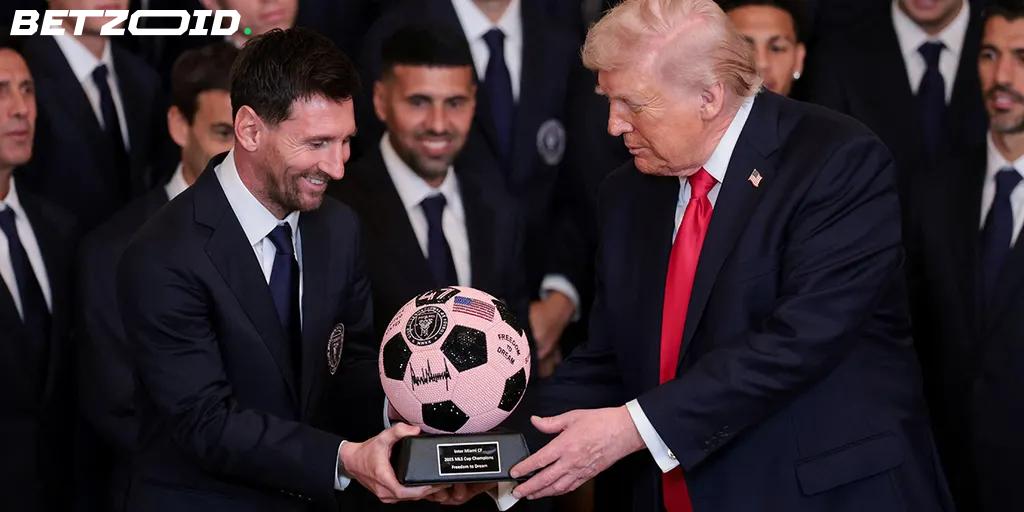
"I'd love to be there, but honestly, I wouldn't pay that price either." Those words from Donald Trump, the current U.S. president and self-proclaimed billionaire, speaking to the New York Post, highlight a growing concern: when the host nation's leader won't purchase tickets to his own country's World Cup matches, FIFA faces a serious credibility issue.
Entry-level tickets for the United States Men's National Team's opening match against Paraguay in Southern California on June 12 are hovering around $1,000 USD. For the final at MetLife Stadium in New Jersey, prices are reportedly reaching $6,000. These figures are troubling for a tournament meant to expand football's footprint in North America—instead, they're effectively shutting out the very fans the sport needs to cultivate.
Infantino's Justification Falls Flat
FIFA president Gianni Infantino attempted to defend the pricing structure by suggesting that attending a college football game in the United States costs at least $300. The argument might carry weight if the facts supported it. Multiple College Football Playoff matches at neutral venues were available well below $100 at face value, with the highest-priced tickets topping out at $219—nowhere near the four-digit price tag for a World Cup group stage match.
Attempting to convince supporters that these inflated prices represent the new normal is a miscalculation, especially when the pushback is coming directly from the highest office in the country.
The 2026 World Cup represents a pivotal moment for football in the United States—the first time the nation has hosted since 1994, offering a unique opportunity to transform casual observers into dedicated fans. But that transformation won't happen if people are watching from pub barstools because match tickets cost as much as a trip to Europe.
Long-Term Implications for the Tournament
The real danger extends beyond negative headlines. It's the prospect of lackluster atmospheres—matches in massive 90,000-capacity NFL venues with pockets of travelling supporters and swaths of empty seats because local fans couldn't rationalize the expense. That imagery would haunt this World Cup's legacy for generations.
For those analyzing USMNT odds or tournament betting markets, it's worth noting that home-field advantage—typically one of the most concrete benefits for a host nation—may prove far less substantial than anticipated. A $1,000 entry barrier doesn't create passionate home support. It breeds frustration and alienation.
Trump has confirmed he'll be watching from home. Countless Americans will be right there with him.