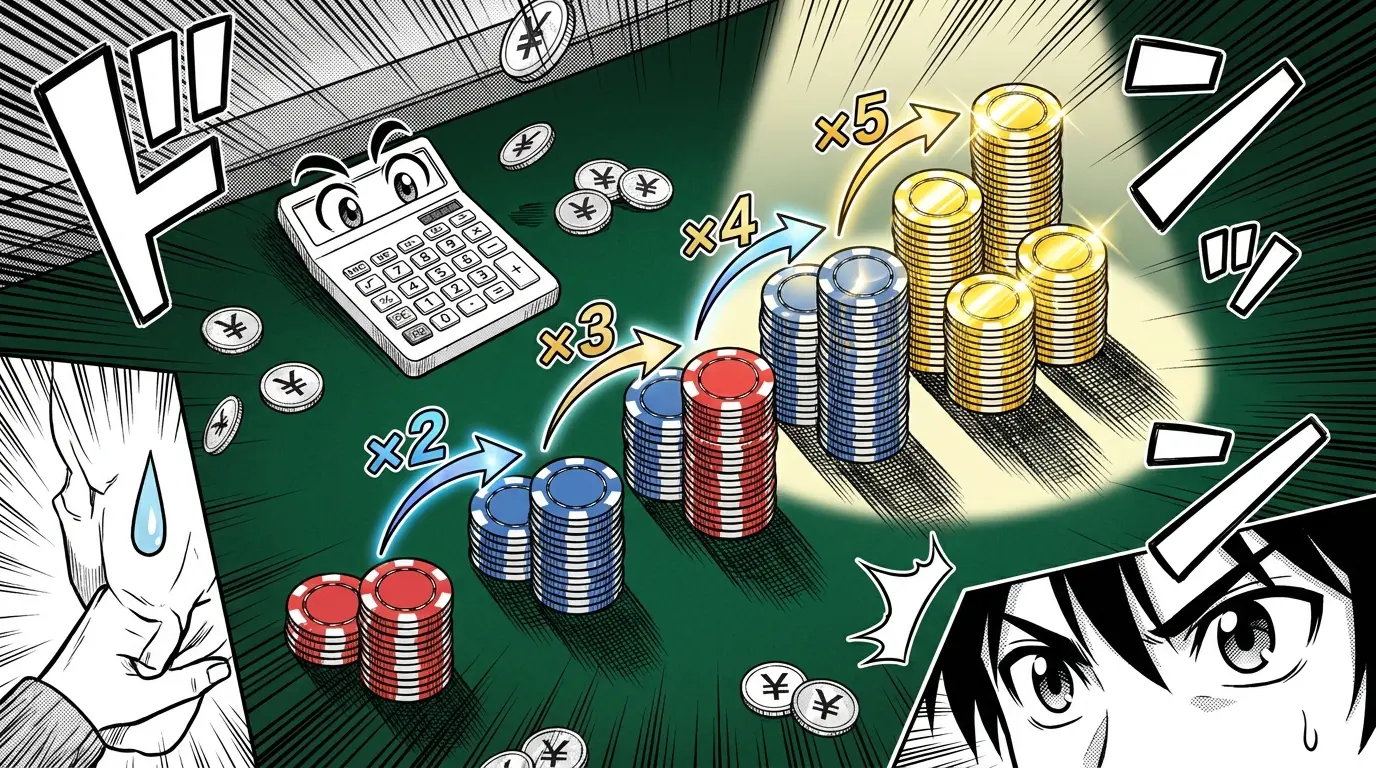
That $100 free bet looks like free money—until you read the part where you have to wager it five times before touching a dollar of winnings. This is where most Canadian bettors get caught off guard. Understanding how wagering requirements work for betting bonuses is the difference between actually pocketing value and chasing a balance you'll never cash out. The numbers attached to these offers aren't arbitrary; they're carefully designed to keep your money in play longer than you'd like.
At Betlama, we've read thousands of bonus terms across Canadian sportsbooks, and the pattern is depressingly consistent—the headline offer is loud, the conditions are quiet. By the end of this guide you'll know exactly how to calculate playthrough, which bets actually count, why odds restrictions slow you down, and what happens when the clock runs out. No fluff. Just the math and the traps.
A wagering requirement is the number of times you must bet a bonus amount before any winnings become withdrawable cash. Simple as that. If you get a $50 bonus with a 5x wagering requirement, you have to place $250 in total bets before the money turns real.
Think of it as a lock. The sportsbook hands you the key, but you can't open the vault until you've spun the dial enough times. Until then, that balance shows up in your account but stays trapped—you can see it, you just can't have it.
The phrase shows up in slightly different language depending on the operator. Some call it "rollover," others say "playthrough" or "turnover." They all mean the same thing: a multiplier applied to either your bonus, your deposit, or both combined. That last distinction matters more than people realize, and we'll get into why shortly. For now, the key takeaway is this—a wagering requirement isn't a fee, it's a condition. You're not paying anything extra. You're just being told how much you need to bet before the promotional money behaves like normal money.
Decoding the 10x Rollover Tag
So what is a 10x rollover on a betting bonus, exactly? It means you must wager the relevant amount ten times over. Where it gets tricky is figuring out what "the amount" refers to.
Say you deposit $100 and grab a matching $100 bonus. A 10x rollover on the bonus alone means $1,000 in wagers. But if the terms say 10x on deposit plus bonus, suddenly you're looking at $2,000 in turnover—double the work. Same headline number, wildly different effort. Always check whether the multiplier hits the bonus, the deposit, or the sum. That single word changes everything about whether the offer is worth your time. If you're comparing welcome deals across the latest betting apps in Canada, this is the first detail to pin down.
Why Do Sportsbooks Attach Strings to Bonuses?
Here's the honest answer most guides dance around: betting bonuses exist to acquire customers, not to give away money. The wagering requirement is the mechanism that turns a marketing cost into a profitable transaction. Without it, every sharp bettor would deposit, claim the bonus, place one safe bet, and withdraw—leaving the sportsbook bleeding cash.
The requirement does several jobs at once, and understanding why betting bonuses have wagering requirements helps you spot which offers are genuinely generous versus which ones are smoke.
Bonus abuse prevention — Without rollover, professional arbitrage players would strip every promotion bare within minutes of signing up.
Volume guarantees — A 5x requirement on a $100 bonus locks in at least $500 of betting activity, and the house edge does the rest over that volume.
Retention — The longer you're playing to clear a bonus, the more likely you become a regular customer who bets without promotions.
Margin protection — Sportsbook odds carry a built-in margin (often 4–7%). Forcing turnover means that margin grinds against your bonus the whole way through.
That last point is the one that stings. Every time you place a qualifying bet, the bookmaker's edge nibbles at your balance. By the time you've cleared a high rollover, the math has often eaten a meaningful chunk of the original bonus value. This is exactly why a $200 bonus with 8x wagering is frequently worth less than a $100 bonus with 3x. The size of the carrot matters far less than the length of the stick. Smart bettors learn to read the requirement before they ever look at the dollar figure.
How to Calculate the Playthrough on Your Bonus
Learning how to calculate wagering requirements on a bonus comes down to one formula, but you need to know which numbers to plug in. The base equation is: bonus amount × rollover multiplier = total amount you must wager. Get that, and you can evaluate any offer in seconds.
Find the bonus amount. This is the promotional credit—say, $75.
Identify the multiplier. Look for the rollover figure, like 6x.
Check what the multiplier applies to. Bonus only, deposit only, or deposit + bonus.
Multiply. $75 × 6 = $450 in qualifying wagers.
Factor in minimum odds. If only bets at -200 (1.50) or higher count, your real workload climbs.
Let's make it concrete. The table below shows how the same $100 bonus changes depending on the rollover and what it's applied to. We've run these numbers across dozens of Canadian offers, and the variance is genuinely shocking.
Bonus Setup
Multiplier
Applies To
Total Wagering Needed
$100 bonus, $100 deposit
3x
Bonus only
$300
$100 bonus, $100 deposit
5x
Bonus only
$500
$100 bonus, $100 deposit
10x
Bonus only
$1,000
$100 bonus, $100 deposit
5x
Deposit + bonus
$1,000
$100 bonus, $100 deposit
8x
Deposit + bonus
$1,600
Notice how a 5x on deposit-plus-bonus demands the exact same turnover as a 10x on bonus alone? That's the kind of detail operators count on you missing. When you compare offers, always reduce everything to a single number: total dollars you must wager. That figure—not the headline bonus—tells you the true cost of clearing it.
Working Out Free Bet Playthrough
Free bets work differently, and the confusion costs people money. With a standard free bet, you place a wager using bonus credit, but you typically keep only the winnings, not the stake. So a $20 free bet at even odds returns $20 in profit—not $40.
How do playthrough requirements work for free bets specifically? Often the winnings themselves carry a separate wagering condition. You win $20, but now that $20 might need 1x to 3x turnover before it's withdrawable. The free bet clears its own obligation when placed, then the winnings inherit a new one. Read both stages carefully, because a "no wagering" free bet and a "winnings subject to 3x" free bet are completely different animals.
Do All Your Bets Count Toward Clearing It?
Short answer: no, and assuming otherwise is the fastest way to stall your progress. Whether all bets count towards wagering requirements depends entirely on the contribution rules buried in the terms.
Most sportsbooks weight bets by type. Singles at qualifying odds usually count 100%. But system bets, heavily hedged accumulators, or wagers on certain low-margin markets might count partially or not at all. Some operators specifically exclude bets where you back both outcomes to lock in a result—they've seen that trick before.
In our experience reviewing Canadian terms, the most common exclusions are cashed-out bets, void selections, and wagers placed below the minimum odds threshold. A cashed-out bet frequently contributes zero, even if you staked real money. So that defensive cash-out you made to protect a balance? It probably did nothing for your rollover. Track which bets qualify, or you'll wager far more than the math suggests. The same caution applies whether you're betting on a major final like the Ballon d'Or markets or grinding through a quiet midweek slate.
Reading the Fine Print Before You Deposit
Before you click deposit, the terms page is your single most valuable read—and it's deliberately dense. Knowing how to read the terms on a betting bonus saves you from offers that look great and play terribly. We always scan for the same handful of clauses, in this order, because they're where the value gets quietly drained.
What the rollover applies to — Bonus, deposit, or both. This single line can double your required turnover.
Minimum odds — Bets below a threshold (commonly 1.50 or 1.80) usually don't count toward clearing the bonus.
Time limit — Most bonuses expire in 7 to 30 days. A tight window with a high rollover is a trap.
Game and market weighting — Which sports, bet types, and markets contribute, and by how much.
Maximum bet cap — Some terms limit how much each qualifying wager can be, stretching out the clearing time.
Maximum cashout — Occasionally winnings from bonus play are capped, so you can't withdraw beyond a set figure.
Excluded payment methods — Deposits via certain e-wallets sometimes void bonus eligibility entirely.
Here's the thing about fine print: operators are legally required to disclose it, but they're under no obligation to make it readable. The clause that hurts most is usually the shortest. We've seen $250 welcome offers rendered nearly worthless by a single line capping qualifying bets at $5 each—turning a few days of normal betting into weeks of tiny, tedious wagers. At Betlama, we treat the terms page as the real offer and the headline banner as marketing. Read it once, slowly, before any money moves. Five minutes of reading beats a month of frustration chasing a bonus you were never realistically going to clear. If you mostly bet from your phone, our roundup of the best iOS betting apps in Canada notes which operators surface their terms clearly inside the app.
How Odds Restrictions Quietly Slow You Down
Minimum odds clauses are the silent killer of bonus value. The way odds restrictions affect wagering requirements is brutal in its simplicity: you can't grind down rollover with safe, low-odds bets.
Say the terms demand minimum odds of 1.80 (-125). You can't just hammer heavy favourites at 1.20 to clear turnover with minimal risk—those bets won't count. You're forced into riskier wagers, which means more variance and a higher chance of busting your balance before you finish. That's the trap. The restriction pushes you toward bets where the bookmaker's edge bites harder and outcomes are less predictable. A high rollover combined with a steep minimum-odds rule is, frankly, designed to make clearing the bonus statistically unlikely. Always read these two terms together—never in isolation.
What Happens If You Miss the Deadline?
You lose everything tied to the bonus. That's the blunt reality of what happens if you don't meet the wagering requirement in time. The unclaimed bonus credit vanishes, and crucially, so do any winnings generated from it.
So how long do you have to clear a betting bonus? Most Canadian sportsbooks give you between 7 and 30 days from activation. Miss that window and the system automatically strips the bonus balance, leaving only your original deposited funds—if those weren't tangled into the requirement too.
The cruel part is partial progress earns you nothing. Clear 90% of a $1,000 rollover and run out of time? You forfeit the whole thing. There's no pro-rated payout. This is exactly why a generous bonus with an impossibly short deadline is worse than a modest one you can realistically finish. Plan your betting volume against the clock before you commit—especially around dense schedules like an MLB season, where it's tempting to over-bet just to beat the timer.
Smart Habits for Clearing Bonuses Safely
Clearing a bonus shouldn't mean betting more than you'd planned or chasing turnover with money you can't afford to lose. The healthiest approach treats the bonus as optional value, not an obligation. If clearing it requires reckless wagering, the bonus isn't worth claiming. Here are the habits we've found actually work.
Calculate total turnover first. Before depositing, multiply it out. If the number feels uncomfortable, walk away—no bonus is worth overextending.
Bet at your normal stakes. Don't inflate wagers just to clear faster. Stick to amounts you'd bet without any promotion in play.
Track your progress. Many accounts show a wagering meter. Check it weekly so you're never surprised by the deadline.
Favour qualifying bets you'd make anyway. If you were going to bet that match at 1.90 regardless, that wager pulls double duty.
Respect the time limit. Spread turnover evenly across the window rather than scrambling at the end.
Never deposit purely to chase a bonus. The promotion should complement your betting, not drive it.
The bettors who get burned almost always make the same mistake—they let the bonus dictate their behaviour. They bet bigger, take worse odds, and rush toward a deadline, all to unlock money that the house edge has already partly consumed. Approach it the other way around. Bet as you normally would, let the bonus clear as a byproduct, and treat any remaining balance you can't realistically wager as a sunk marketing gimmick, not a loss. That mindset keeps your bankroll—and your enjoyment—intact.
Related Bonus Terms Worth Understanding
Wagering requirements don't operate alone. A few neighbouring terms shape how much value an offer actually delivers, and knowing them rounds out your reading of any promotion.
Game weighting / contribution — More common in casino bonuses, but some sportsbooks apply it to bet types. It determines what percentage of each wager counts toward rollover.
Maximum cashout — A cap on how much you can withdraw from bonus-derived winnings, regardless of how much you actually won.
Sticky vs. non-sticky bonuses — A sticky bonus can't be withdrawn itself, only the winnings; a non-sticky bonus separates cleanly from your real funds.
Free bet vs. deposit match — Free bets typically return winnings only; match bonuses add credit you then wager. Whether free bet winnings are subject to wagering requirements varies by operator.
Qualifying deposit — The minimum amount you must deposit to trigger the offer in the first place.
Each of these connects back to the central question—how much will you really walk away with? We cover several of them in dedicated guides where the detail deserves more room, and the same logic carries over to niche markets like esports betting on Valorant, where bonus terms can read very differently from mainstream sports.
The single most valuable habit you can build is reframing how you see a bonus: it's not free money with a catch, it's a conditional offer where the conditions are the actual product. Once you read the rollover, the odds restriction, and the deadline as one combined cost, you'll evaluate any promotion in under a minute. Run the turnover math before depositing, bet only at your usual stakes, and treat unclearable bonuses as marketing noise rather than missed opportunity. That discipline protects both your bankroll and your sanity. From here, dig into variance, margin, and bankroll management—the three concepts that, together with wagering requirements, explain almost everything about long-term betting value.