
Chelsea's Private Equity Experiment Unravels in Spectacular Fashion
"These are not just commercial enterprises." Those words from Christian Purslow — a football executive who served under Roman Abramovich at Chelsea, managed Liverpool's operations, and guided Aston Villa — capture what Todd Boehly and Clearlake Capital appear to have fundamentally misunderstood. He characterized the pairing of heavily finance-driven private equity ownership with football as an "explosive cocktail." Currently, that mixture is detonating across west London.
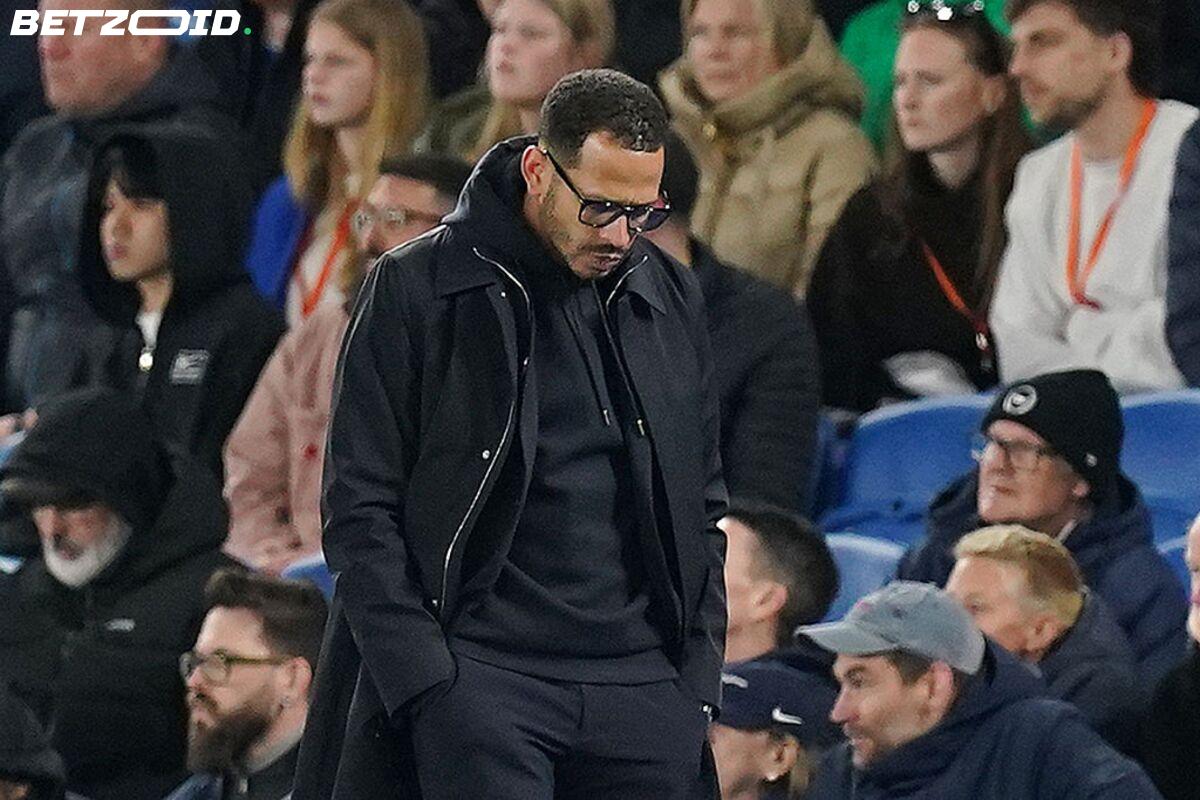
The Blues dismissed their manager this week following five straight Premier League matches without scoring a single goal — all losses. It represents the club's most dismal stretch in more than 100 years. Liam Rosenior's contract was terminated fewer than four months into what was meant to be a 6.5-year deal — a decision that perfectly illustrates just how disorganized the leadership has become.
Financial figures that should genuinely worry supporters
Chelsea have invested over £1.5 billion assembling what stands as English football's priciest squad ever. The club recorded a £262 million pretax loss for the year — establishing a new Premier League benchmark for red ink. Now they're facing the very real prospect of missing out on Champions League qualification for next season, a reality reinforced by Tuesday's 3-0 defeat at Brighton.
This extends far beyond damaged reputation. Chelsea already generates the lowest revenue among the Premier League's "big six" clubs and operates the smallest stadium within that elite group. Remove Champions League broadcasting income and prize money from the equation, and the financial outlook deteriorates dramatically — precisely as UEFA's regulations are becoming stricter, limiting player expenditure as a proportion of revenue. Reduced income translates to diminished spending capacity. Less spending produces an inferior squad. An inferior squad decreases European qualification chances. The cycle feeds itself.
To comply with UEFA's financial fair play settlement, player sales emerge as the most apparent solution. However, the entire investment strategy — the fundamental reason Boehly and Clearlake spent £4.25 billion acquiring this institution — rested on Chelsea maintaining permanent Champions League status and title-challenging capability. That rebuilding process becomes impossible when you're selling off the very players meant to achieve those objectives.
The asset portfolio approach that spectacularly misfired
The ownership group's core philosophy involved signing young talent to contracts spanning eight years or longer, treating them as appreciating investments within a portfolio. The goal was securing future value before it departed on free transfers. Theoretically sound. Practically, they misjudged enough targets to create serious problems.
Mykhailo Mudryk commanded £88 million, consistently underperformed, and has been sidelined since 2024 following a positive test for a prohibited substance. This approach also produced a squad noticeably lacking veteran leadership — the type of experienced voices who might have provided stability during the downward spiral. Squad turnover has been constant: Chelsea's player rotation across the previous two seasons exceeded every competitor near the table's summit.
Simultaneously, players who genuinely resonated with supporters — Conor Gallagher, Noni Madueke — were transferred for balance-sheet considerations rather than footballing logic. Such choices erode the bond between club and fanbase more rapidly than any losing streak could.
Chelsea supporters continue singing Abramovich's name at matches. Under the Russian owner, the club captured five Premier League titles, five FA Cups, and two Champions League trophies. The Boehly-Clearlake administration has delivered a Conference League triumph and a Club World Cup — silverware the faithful regard as consolation prizes. While this comparison doesn't entirely do justice to the new proprietors, fairness matters less than reality. Perception defines their operating environment.
Purslow described the situation as "naive." That descriptor might best summarize everything that's transpired. The private equity handbook — extended contracts, financial optimization, asset value maximization — functions differently when those assets possess opinions, representation, and perform before 40,000 spectators every fortnight. Chelsea's ownership is absorbing this lesson at tremendous cost, with the club suffering the consequences where it matters most: on the pitch.