
2026 World Cup Final Tickets Listed at $2.3 Million Each on FIFA's Resale Platform
"Fans are the key," Manchester City manager Pep Guardiola recently stated. "The key for this business to go on." It's a straightforward observation — yet FIFA seems determined to disregard it entirely.
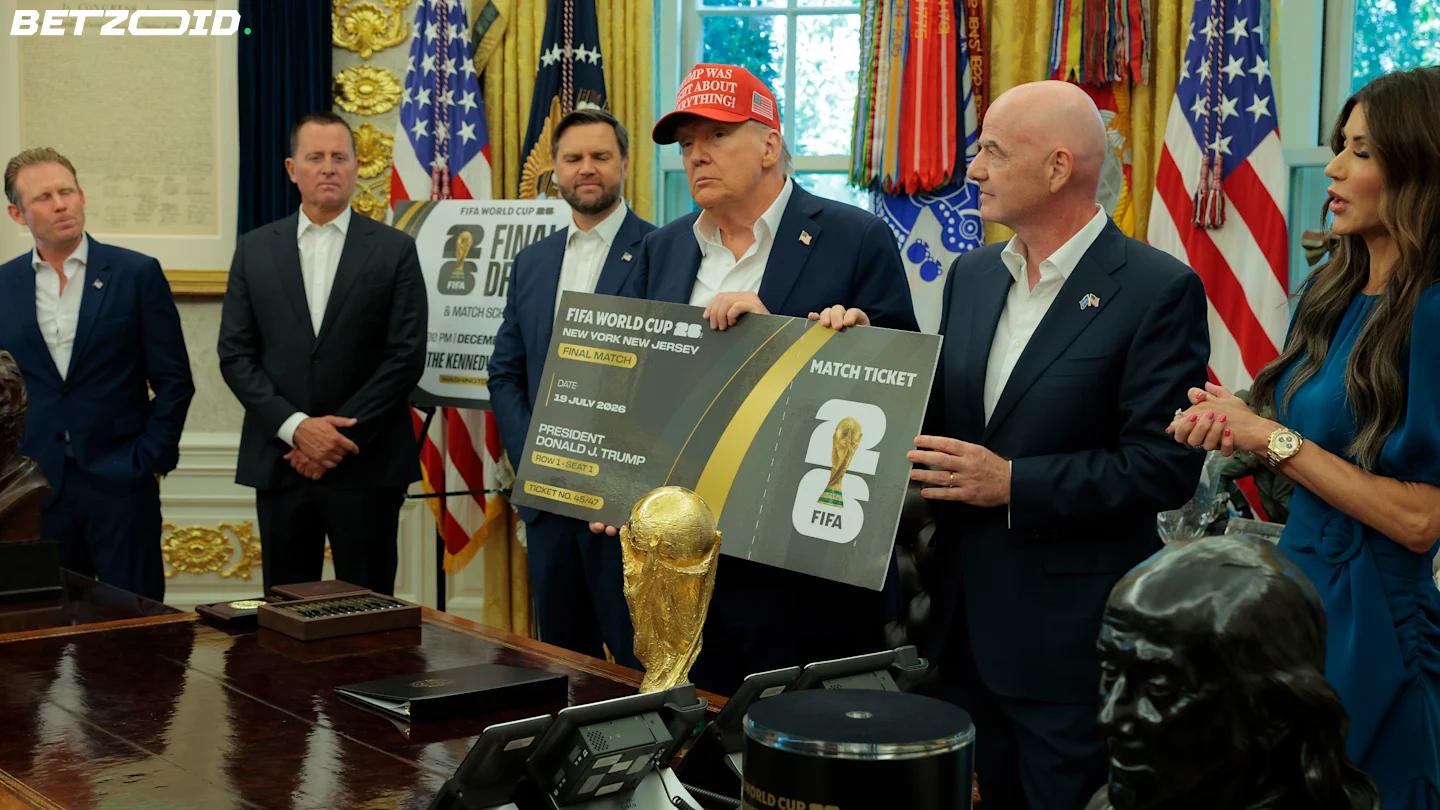
Four tickets for the 2026 World Cup final at MetLife Stadium in New Jersey are presently listed at $2,299,998.85 apiece on FIFA's official resale platform. These aren't luxury suites with premium amenities, catering services, or player meet-and-greets. They're simply Category One seats — positioned nearest to the pitch, beside one of the goals — offering a close-up view of players but making it challenging to follow the overall flow of the match. For what Mohamed Salah earns in a month, you'll get a sightline that thousands of other stadium seats provide.
FIFA Enters the Ticket Resale Market
This situation stems from FIFA's unprecedented decision to participate in the secondary ticket marketplace for the first time in World Cup history. Relaxed resale regulations in both the United States and Canada — nations co-hosting 91 of the tournament's 104 matches — permit sellers to set whatever prices they wish. FIFA collects a 15% commission from sellers and another 15% from buyers on each transaction. Should someone actually purchase that $2.3 million ticket, FIFA would pocket approximately $690,000 from a single seat sale.
Football Supporters Europe articulated the concern succinctly last year: "The fact that scalping is legal doesn't mean FIFA must become the scalper."
FIFA has maintained a consistent position: this simply reflects standard North American market practices. Their spokesperson referenced "industry trends across various sports and entertainment sectors" to defend their approach. While technically accurate, this explanation misses the fundamental issue entirely.
Breaking Down the Numbers
The reality is that nobody will likely purchase the $2.3 million ticket. It's almost certainly a placeholder listing intended to attract an outrageous offer. However, the most affordable Category One seat for the final still carries a price tag exceeding $16,000 — equivalent to roughly three months' salary for the average New Jersey worker. By comparison, a similar ticket for the 2022 World Cup final in Qatar cost approximately $1,600. That represents a tenfold price increase within just three years.
Guardiola, among the few football managers who could easily afford attending multiple matches without financial concern, didn't mince words about his disappointment. "Before I remember the World Cup — years, years, years ago — was like a celebration of the joy of football for the nations going there. Everyone traveled all around the globe, from the other continents, to see your country, to play there. And it was affordable."
While he stopped short of launching a full attack — "I'm not there, so I don't know the reason why" — his point resonated clearly.
When Jules Rimet, a French diplomat haunted by World War I's devastation, established the World Cup in 1930, he envisioned football as a force for uniting nations. His perspective on financial losses: "never fatal." FIFA's current administration appears to have adopted the polar opposite philosophy — that no revenue opportunity, regardless of how out-of-touch it may seem, should remain untapped. Whether this approach succeeds when stadiums begin filling, or potentially fail to fill, remains the critical question looming over New Jersey next summer.