
World Cup 2026 Ticket Prices Skyrocket Beyond Reach for Average Fans
FIFA has just unveiled what may be the most expensive ticket in World Cup history: a $32,970 seat for the final match at MetLife Stadium. This isn't some VIP hospitality package complete with helicopter rides—it's simply one seat to watch a soccer game.
The price tag for the July 19 final, announced last Thursday, represents triple what FIFA's priciest ticket cost before this tournament. It marks the culmination of a pricing approach that has transformed the world's game into what increasingly resembles a month-long exclusive event catering to the wealthy.
The real cost of attending
Consider what it takes for a family of four to attend Norway versus Senegal—among the most affordable group stage matches in the New York region. Four upper-corner seats in Section 306 at MetLife Stadium run $402.50 each through FIFA's official resale platform, representing the cheapest option available. That's $1,610 before purchasing any concessions.
Traveling from New York City? NJ Transit is charging $105 per person on match days. Your family total now sits at $2,030 just for transportation and admission. Parking at American Dream costs $225, and you'll be walking from there since regular lots have been converted for fan activities and security purposes. For a 90-minute match, that breaks down to approximately $5.64 per person, per minute.
The New York Mets are hosting a game at Citi Field that same evening. Tickets begin under $50. Draw your own conclusions.
Contrast this with Qatar 2022, where the highest-priced Category 1 seat for the final was $1,606—with group stage entry starting at just $69. Tournament attendees also received complimentary metro access. In 2022. In Qatar.
FIFA's justification falls flat
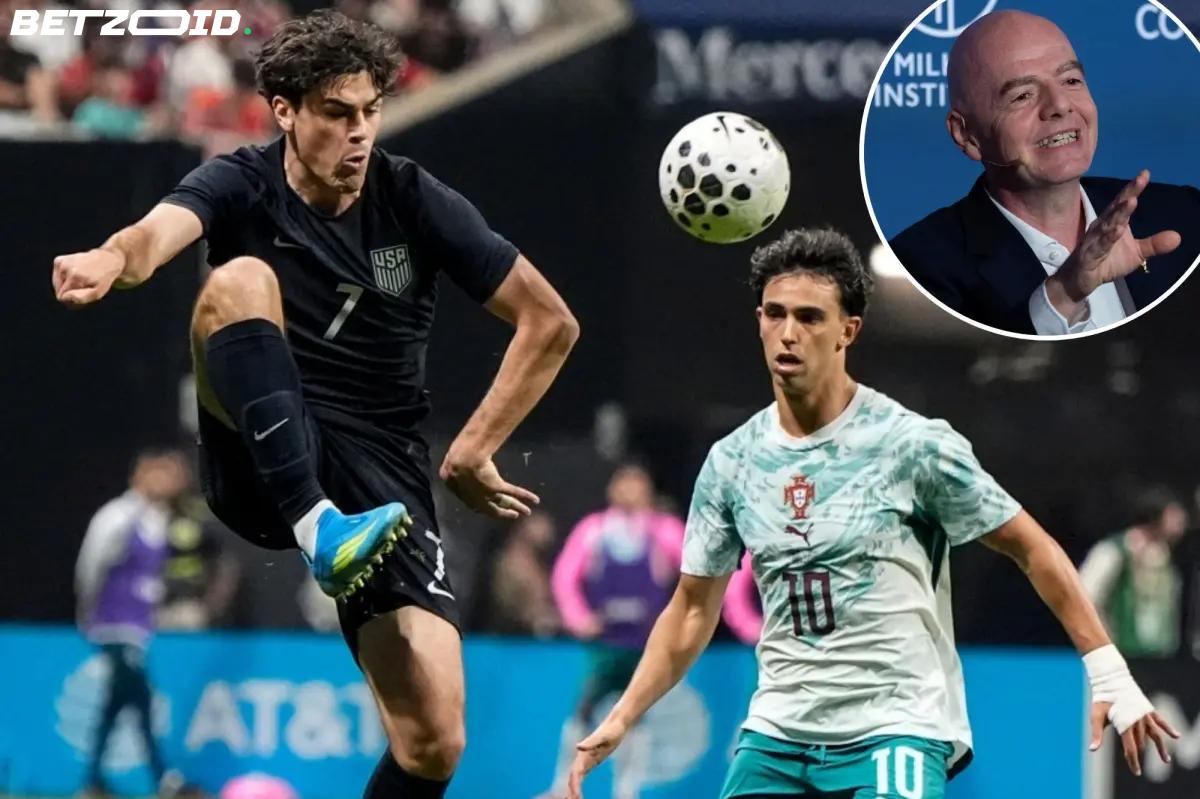
FIFA president Gianni Infantino spoke at the Milken Institute Global Conference in Beverly Hills last Tuesday—a fitting venue given the pricing strategy—and defended the approach: the American market necessitates it. Setting prices too low, he argued, would flood the resale market with even higher prices. He further claimed 25 percent of group stage tickets are available under $300, suggesting you couldn't attend a major U.S. college game for that amount.
That final assertion is provably incorrect. Cotton Bowl tickets dropped below $50 last year following Texas A&M's first-round College Football Playoff elimination. However, the resale market argument carries some merit—scalping represents a genuine challenge FIFA doesn't typically encounter in Europe, where secondary markets are frequently prohibited and distribution occurs through official supporter organizations.
The problem is FIFA appears to have raised prices to match a secondary market ceiling that isn't materializing for this tournament. Data from TicketData.com indicates prices across nearly all 91 matches in the U.S. and Canada have declined over the past month, with the vast majority experiencing double-digit percentage drops. The American Hotel and Lodging Association published a report last Monday revealing hotel reservations in World Cup host cities are tracking below projections for 80 percent of survey participants.
Ticket sales for the U.S. Men's National Team opener against Paraguay—arguably the easiest sell of the entire tournament—have significantly underperformed. A minimum $1,120 ticket for a U.S. home opener, compared to $302 four years ago for Qatar versus Ecuador, explains the lackluster demand.
Meanwhile, Penn Station will restrict access to ticketholders only on New York match days, NJ Transit's pricing has sparked considerable local backlash, and the actual soccer has barely registered amid the controversy. FIFA's agreements with host cities grant the organization nearly all revenue while municipalities shoulder security and infrastructure expenses. Infantino projects FIFA will generate at least $11 billion from the tournament against a $3.6 billion budget—for an entity officially registered as a non-profit under Swiss law.
The organization maintains it reinvests those funds into developing soccer worldwide. Whether that development reaches the nation that just facilitated the largest financial windfall in sports history remains, at this stage, a legitimate question.